BY CHRISTINE ODIRA
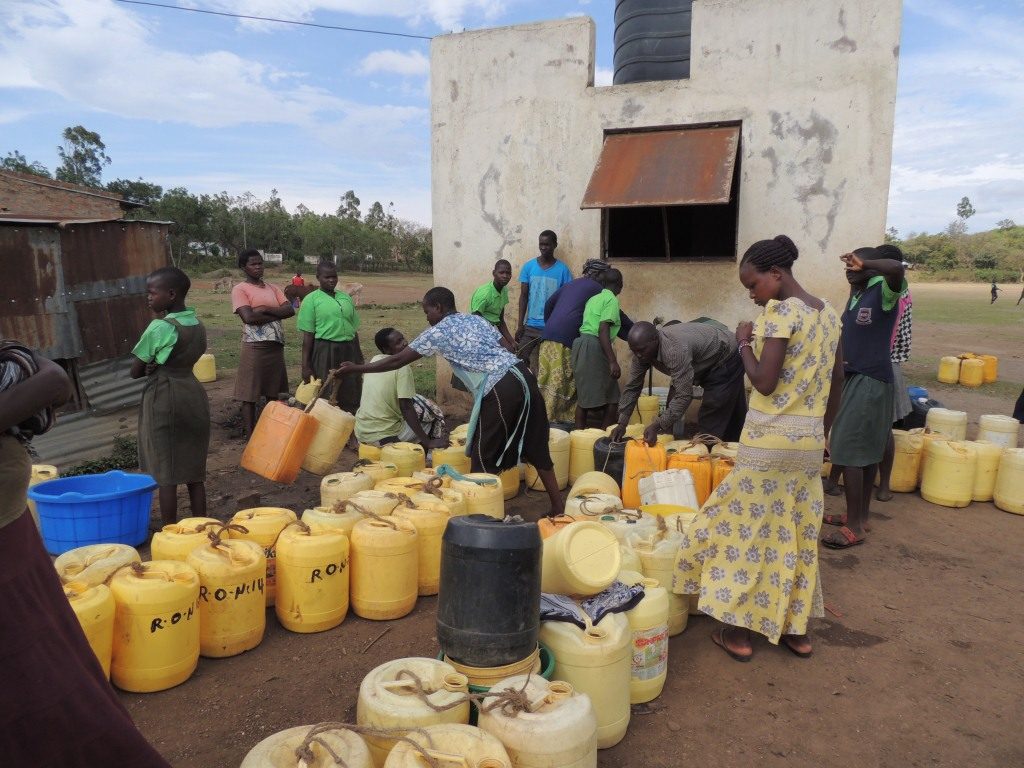
As dawn breaks over Migori Town, the day’s first queue is not outside a bank or a bus stage, but beside a water vendor.
Mothers, traders, boda boda riders, and schoolchildren clutch empty jerricans, waiting patiently for a commodity that once flowed freely from their taps. The prolonged water shortage has transformed an ordinary morning routine into a daily struggle, forcing residents to spend more time and money searching for water than ever before.
For several weeks, large sections of Migori Town have experienced acute water shortages, disrupting businesses, straining household budgets, and raising questions about the reliability of the county’s water supply system. The crisis has forced many residents to rely on private vendors who transport water using bowsers and handcarts, often charging prices that many families can barely afford.
This comes as Migori county government has said they have committed Sh80million to improve water infrastructure not only in Migori town, but also Awendo, Rongo and Isebania towns.
In an interview, John Ochollah, the Director of Water in Migori County said they are working with MIWASCO, a semi-autonomous body, to address the current shortage caused by a combination of infrastructure challenges, environmental factors, and high operational costs.
One of the biggest setbacks occurred when floods damaged the water intake at River Riany, the town’s primary source of water.
“Our intake at River Riany is located on a flood plain,” he explains. “When the heavy rains came, the floods swept away part of the intake infrastructure. We carried out restoration works, but the damage significantly interrupted water production.”
At Marindi Estate, residents say the shortage has become a burden they carry every day.
“We have not seen water flowing from our taps for almost a month,” says Mary Achieng, a mother of three who was spotted waiting beside a water cart with several empty jerricans.
“Every morning we wake up wondering where we will find water. The vendors are charging us up to fifty shillings for one jerrican. We are spending money meant for food and school expenses just to get water. It is becoming unbearable.”
The frustration is shared by many residents across the town.
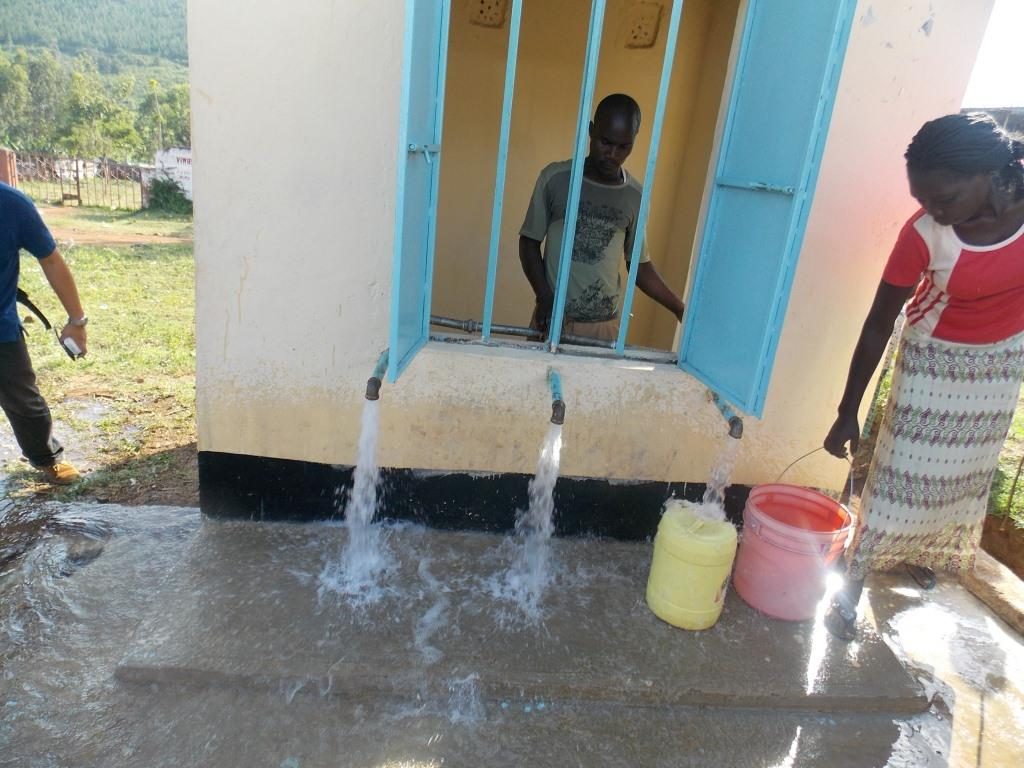
At Nyasare, Ochieng Odhiambo, a boda boda operator, says the shortage has affected both his livelihood and family life.
“Before going to work, I have to look for water first. Sometimes I spend more than an hour queuing. By the time I start carrying passengers, I have already lost valuable working hours. Water should not be this difficult to access.”
For business owners, the shortage has translated into increased operating costs and reduced profits.
At Migori Open Market, Mama Atieno, who runs a small hotel, says the lack of reliable water supply has significantly affected her business.
“Customers expect clean plates, clean tables, and good hygiene. Without water, everything becomes difficult. We now buy water daily, and the cost keeps increasing. Our profits are shrinking because of expenses we never used to have.”
Nearby, barber shop owner Kevin Ouma says the situation is affecting customer confidence.
“People come here expecting clean services. Sometimes we have to postpone work because there is no water. Some customers simply leave and go elsewhere. We are losing business every day.”
While public criticism has largely been directed at Migori Water and Sanitation Company (MIWASCO), county officials insist that the challenges facing the water sector are more complex than many residents realize.
Even after repairs were completed, the town’s aging distribution network continued to create challenges.
Back to the county government, Ochollah notes that many of the pipelines supplying water to residents are old and vulnerable to frequent bursts.
“Some pipelines remain dry for extended periods. Once pressure is restored, many of them burst because the infrastructure is old. This leads to repeated interruptions before water can reach consumers.”
Beyond the physical infrastructure, financial constraints continue to pose a serious challenge.
Migori’s water system relies on a double-pumping mechanism that consumes significant amounts of electricity, resulting in high operational expenses.
“Electricity is one of our biggest operational costs,” says Ochollah. “In one financial year, we spend between twenty and thirty million shillings on electricity alone. Despite these challenges, the County Government has continued supporting payments to ensure power is restored whenever disconnections occur.”
He further clarified that reports suggesting permanent power disconnections due to unpaid bills are often exaggerated.
“Our power is restored because we pay. On our part as the County Government, we are doing our bit to ensure the company continues supplying water to residents.”
As residents continue to endure the effects of the shortage, the County Government is exploring both immediate and long-term solutions aimed at improving water security within the town.
Among the measures being implemented is the rehabilitation of existing boreholes and the development of new groundwater sources to supplement the main supply system.
“We have already supplemented the commercial water system with standalone boreholes within town,” Ochollah says. “We have also budgeted to rehabilitate non-functional boreholes, including the Forest Borehole located within the Water Works compound. In addition, we plan to drill another borehole in Pandi Town to strengthen water supply across Migori.”
The move is expected to reduce overreliance on a single source and provide alternative supplies during periods of infrastructure failure or environmental disruption.
For many residents, however, the greatest concern remains when normal services will finally return.
At the Migori bus park, Akinyi Adhiambo, a vegetable vendor, says families are growing weary of waiting.
“Water is life. We can survive without many things, but not without water. We just want the authorities to solve this problem permanently so that our children can live comfortably.”
As the sun sets over Migori Town, water vendors continue pushing heavily loaded handcarts through dusty streets while anxious residents keep watch over empty storage tanks, hoping that tomorrow’s sunrise will bring better news.
The ongoing crisis serves as a reminder that access to clean and reliable water is not merely a service—it is the foundation of public health, economic productivity, and human dignity. As MIWASCO works to stabilize supply and the County Government invests in alternative water sources, residents remain hopeful that lasting improvements will finally bring an end to the struggle of dry taps.
Until then, thousands of households across Migori Town will continue paying the true cost of water scarcity—one jerrican at a time.