

BY CENTRINE ODOYO
For residents of Nyatike Sub-County in Migori County, the prolonged drought has turned the search for water into a daily struggle, affecting both human and animal life while threatening farming activities that many families depend on.
Residents say water sources that once supported communities have dried up or become unreliable, forcing families to walk long distances, buy expensive water or depend on unsafe sources that expose them to diseases.
Joyce Ochieng, a resident of Nyandema Sub-Location, described the situation as alarming, saying the drought has affected everyone, including livestock.
“The drought that is going on is very shocking. Both human beings and animals are not feeling well because of the situation,” said Ochieng.
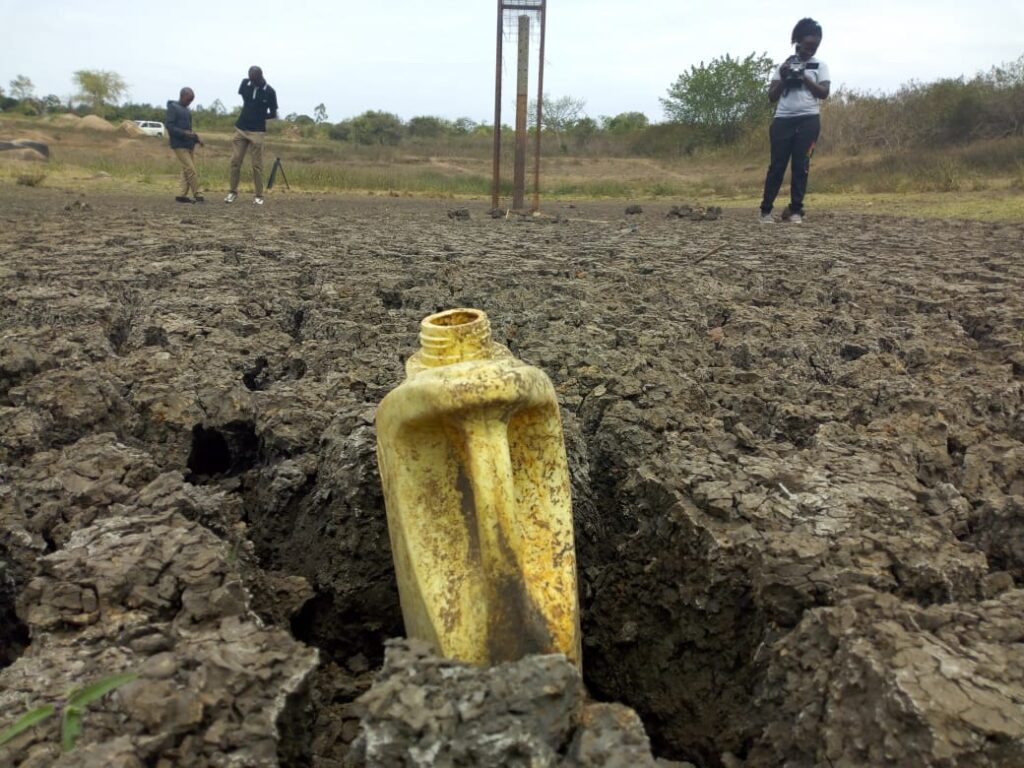
She said although the county government constructed dams in the area about five years ago, the facilities can no longer serve the growing population.
“If you take Nyandema Sub-Location only, we have a very big population of settlers. The dam cannot help the whole population.
The water can only be used for animals, but a normal human being cannot drink it,” she said.
Ochieng added that the water from the dams is muddy and unsuitable even for domestic use such as washing clothes.
“Those who have dug private boreholes are selling water at a very high price. If you use a motorcycle to bring water, one jerrican costs Sh20, which is expensive for a common mwananchi,” she said.
She noted that efforts to provide water sources in schools have helped institutions but have not solved the wider community problem due to the limited capacity.
Ochieng said irrigation remains one of the long-term solutions to the drought crisis since many residents depend on rain-fed agriculture.
“Everybody here depends on rain, and since the drought started, crops have died. Irrigation can help increase farming and improve livelihoods,” she said.
Another resident, Bernard Oloo, said the drought has affected food production and increased health risks due to the search for alternative water sources.
He said women and children have been forced to walk long distances in search of water, but many return without enough supply because rivers have dried up.
“Women walk long distances to fetch water but come back without anything because the rivers are drying. This has forced people to dig deep into the ground to get water and share the same water with animals,” said Oloo.
He warned that using contaminated water has contributed to the spread of diseases such as typhoid and cholera.
Oloo said the drought has also affected education, with families that previously supported learning through agricultural produce struggling to meet school needs.
“We used to pay school fees in kind where you give crops and your child continues with education, but that can no longer happen because farming has been affected,” he said.
Lawi Jaoko, who was speaking during a family gathering in the area, said Nyatike remains a hardship region despite having potential water sources nearby.
He said River Kuja and Lake Victoria could help solve the water crisis if proper infrastructure was developed.
“River Kuja is not very far and the lake is about 30 kilometres away. If we had good leaders, they could organize how water reaches us. If that becomes expensive, they can dig boreholes,” said Jaoko.
He questioned why water projects often fail despite funds being allocated, saying some existing facilities have collapsed due to poor maintenance.
“We only see organizations such as SHOFCO and the UN doing the work. We also have water projects that were built but lack maintenance and have already stopped working,” he said.
Residents further raised concerns over insecurity along the borders with Uganda and Tanzania, saying some fishermen have faced arrests while operating in Lake Victoria.
Another resident said the drought has increased cases of water-related diseases, including bilharzia, due to dependence on unsafe water sources.
He recalled that a dam built five years ago at a cost of Sh4.5 million had initially helped the community but later became unusable due to lack of maintenance.
“I was the chairman when the dam was built. It was even fenced, but because there was no maintenance, people broke into it and now it cannot serve the community,” he said.
The residents have called on the county and national governments to prioritize water projects, maintenance of existing facilities and investment in irrigation to help communities adapt to prolonged drought.
They say without urgent intervention, the drought will continue affecting health, education, livestock and the economic survival of families in Nyatike.
