

BY MANUEL ODENY
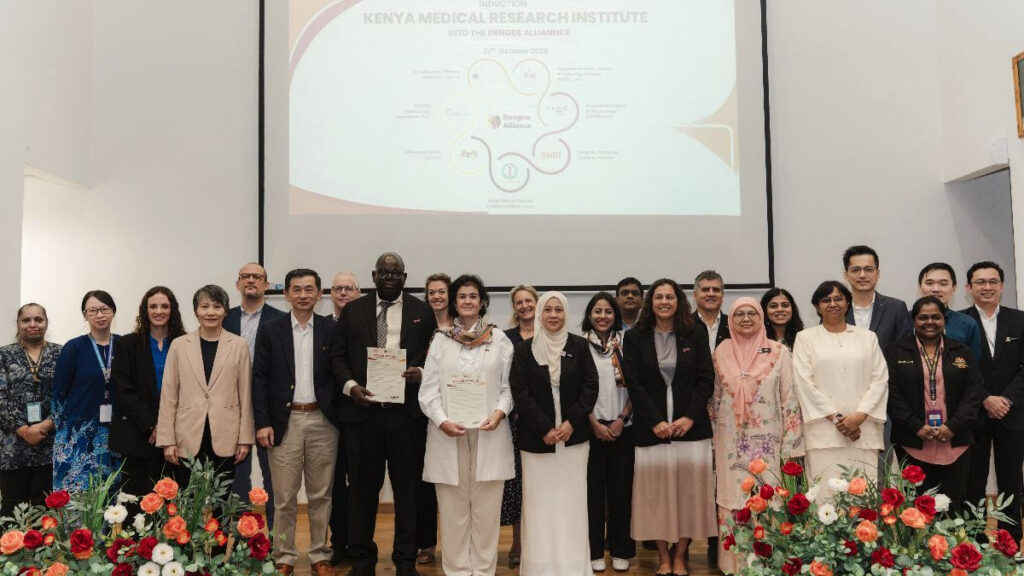
Kenya has become the first African country to join the world Dengue Alliance which enhances research on the little known tropicla disease.\
The country joined the global coalition through the the Kenya Medical Research Institute (KEMRI) during a world meeting of researchers and other stakeholders on 27 October in Kuala Lumpur, Malaysia.
According to the WHO, from January to August 2026, Kenya had reported almost 10,000 cases, representing a substantial increase from the 4,300 cases reported in 2025, and 1,400 cases reported in 2024.
The news was broken in a press release by the Drugs for Neglected Diseases initiative (DNDi), a not-for-profit medical research organization that discovers, develops, and delivers treatments for neglected populations.
The Dengue Alliance was started in 2022 to bring together research institutions in dengue-endemic countries to accelerate the development of treatments of the disease.
Kenya will join DNDi alongside other members like Brazil, Malaysia, India, and Thailand.
“Dengue is a growing public health concern in Africa, but its true burden remains underestimated due to underdiagnosis and underreporting. Through the Dengue Alliance, KEMRI will contribute African expertise and evidence to strengthen global efforts to advance dengue research, surveillance, diagnostics, and clinical management,’ said Dr Erick Muok, Acting Director of Research and Development at KEMRI.
This new membership will expand the geographic and scientific reach of the Alliance, creating new avenues for dengue research on much-needed treatments, and ensure patients from the African continent are prioritized in future studies.
‘We are pleased to welcome KEMRI to the Dengue Alliance. Their expertise in clinical research, diagnostics, surveillance, and outbreak response will help ensure dengue research responds to the needs of affected populations in Africa,’ said Dr André Siqueira, Head of the Global Dengue Programme at DNDi.
“Dengue is no longer a disease confined to traditionally endemic regions, and addressing it requires global cooperation. While we have seen important advancements in vaccines and vector control, there is still no specific treatment for dengue and more research is needed to close this critical gap,’ he added.
The expansion of the Dengue Alliance comes amid growing concerns about dengue as an emerging public health threat in Africa, where there is increasing consensus that the burden is substantially underestimated.
Kenya first reported the epidemic in 1982, and recent dengue transmission has been reported beyond traditionally affected coastal areas, including northern and western Kenya, as well as areas bordering Uganda, South Sudan, and Ethiopia.
DNDi said in Africa dengue is still underreported burden can hinder timely diagnosis, outbreak preparedness, and effective allocation of resources for prevention and control.
Alliance partners are also working to address the lack of specific treatments for the disease and are banking on KEMRI expertise in arboviral diseases, clinical research, diagnostics, surveillance, and climate-related health research to accelerate development of new medicines for affected populations.
