

BY NYANZA NEWS REPORTER
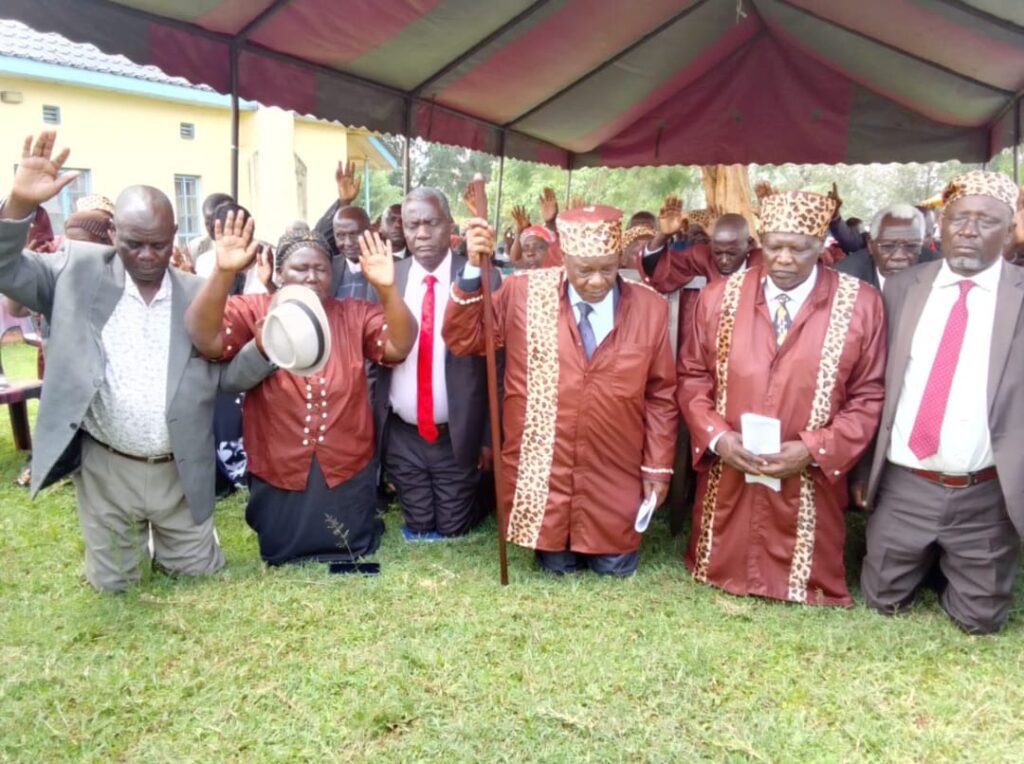
In the heart of Kenya’s Gusii Region, where tradition meets modernity, women have historically held a critical role in peace-making and conflict resolution in the society, despite facing numerous challenges.
The evolving legal and social landscape, particularly after the introduction Kenya’s 2010 Constitution, has reshaped this role, granting women more formal recognition in governance and dispute resolution processes.
This article explores the position of women in conflict resolution in Gusii, focusing on their evolving roles, challenges and the impact of the constitutional changes on their involvement in peacemaking.
The chairman of the Council of Elders in Kisii Central, Jacob Moenga, eloquently highlighted the pivotal role women have played in the peace making processes within families and the broader society.
Speaking at Kisii Central, Moenga pointed out that women particularly mother-in-law, have long been seen as the peacemakers within households.
“When a husband and wife fight, they always turn to their mother in law for mediation. It is she who can settle the dispute and restore peace,” said Moenga.
This traditional role places women at the heart of conflict where their influence often extends beyond the household to larger societal disputes.
Their wisdom, patience and mediation skills have been indispensable in maintaining social harmony.
However, the introduction of the 2010 Constitution, which expanded women’s rights and participation in various sectors, including land ownership and governance, brought about new dynamics in both family and community conflicts.
Moenga noted that while the Constitution has ushered in positive changes, particularly in granting women their own right to own land, it has also led to an increase in disputes.
“The allocation of land to women has sometimes led to conflicts, as it challenges old traditions and norms,” he explained.
The 2010 constitution of Kenya is a landmark document that enshrines gender equality and grants women the same legal rights as men, particularly in areas like inheritance, property ownership and political participation.
These reforms have significantly altered the landscape of conflict resolution in Gusii, where women are now formally recognized as key stakeholders in resolving disputes.
Moenga emphasized that women now play a critical role in governance structures such as the Supreme Council of Elders, where they are given equal voice alongside men.
He cited notable figures like Florence Manduku, Mary Ratemo the retired senior members of the council who have contributed to bringing peace and promoting dialogue.
“Women have been given equal opportunities to voice their opinions and contribute to decision making,” he said highlighting the increasing representation of women in leadership roles.
He also added that since women began sitting at the table and engaging in discussions, the society has seen a significant change.
The shift has not only contributed to more inclusive decision making but has also created a more balanced approach to conflict resolution.
Women’s voices in the Supreme Council of Elders are heard with the same respect as those of their male counterparts, an achievement that would have been unimaginable just a few decades ago.
At the grassroots level, women have continued to serve as mediators in community disputes.
Mary Ratemo, a senior elder in the Supreme Council of Elders Kisii Central, shared her perspective on the vital role women play in resolving conflicts.
“Men alone can’t handle some issues, sometimes it takes the presence of a woman to ensure that the issue is resolved amicably,” says Ratemo.
Mary, who is one of the three women in the supreme council of elders alongside eight men, pointed out that women have contributed to peace building by offering unique insights and fostering dialogue in tense situations.
For Mary, the shift in gender dynamics within the council has been a welcome change.
“We are treated equally, there is no discrimination like in the past,” she said reflecting on the progress made since the constitution 2010 was enacted.
However, she acknowledged that there is still work to be done to ensure greater representation and involvement of women in senior positions.
Despite the key advances made by women in conflict resolution, challenges remain.
One of the key hurdles highlighted by women leaders in the region is the issue of inadequate resources.
Angelina Masese the village elder from Bobaracho Sub County in Kisii County, shared the difficulties faced by local elders in their efforts to mediate disputes.
“Whenever there is a dispute, we go a team of two or three people, usually a woman and a man, to resolve the issue,” Masese explained.
However, the lack of financial support has hindered their ability to carry out their duties effectively.
“We are solving cases without payment, we need the government to fulfill the promises made regarding funding for our work,” she added.
The absence of funding for conflict resolution activities means women, who are often already overburdened with domestic responsibilities, must devote their time and energy to resolving community disputes without any financial compensation.
This situation highlights the need for stronger institutional and recognition of the critical role women play in maintaining peace and order.
As the role of women of conflict resolution continues to evolve, the Gusii region stands at a crossroads.
While significant strides have been made in terms of gender equality and the inclusion of women in governance, there are still barriers to full participation.
Empowering women with the necessary resources, training and institutional support is critical for further strengthening their role in peace building.
Jacob’s call for women to take up leadership positions is an important reminder that the future of conflict resolution in Gusii and beyond depends on the active participation of women in all spheres of life.
“The Bible says that whoever finds a good wife finds a good thing in life,” says Moenga suggesting that women’s contributions to peace are invaluable not only in the home but also in society at large.
Encouraging more women to step forward, take leadership roles, and seek positions of influence within the community and governance structures will be key to sustaining the positive changes that have already taken root.
The representation of women in the Supreme council of elders and other decision making bodies is a step in the right direction, but the journey toward true gender equality in conflict resolution is ongoing.
The role of women in conflict resolution in Gusii is evolving, thanks to the legal reforms brought about by the 2010 constitution and the recognition of women’s abilities to mediate and lead.
From traditional peacemaking in families to formal involvement in governance, women have proven to be instrumental in fostering peace and resolving disputes.
