

BY MANUEL ODENY
A simple technology which can be emulated across the African continent has helped a county in Kenya cut down maternal deaths at birth due to excessive bleeding
Before the use of the technology, Makueni has been one of the top ten counties in Kenya to have recorded the highest maternal mortality.
But since 2022 the county has not recorded a single death due to excessive bleeding in public health facilities since calibrated drapes were used to detect when mothers have excessive bleeding and treat within 15 minutes.
The calibrated drapes are to diagnose severe excessive bleeding after childbirth, medically known as post-partum haemorrhage (PPH) the main cause of maternal deaths during births.
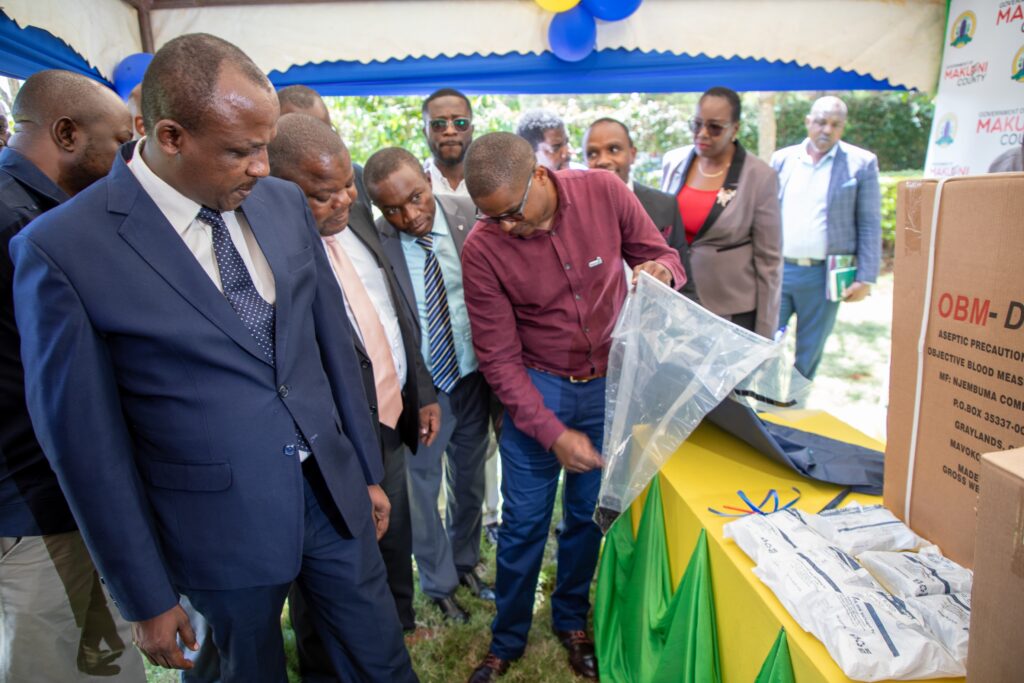
The drapes are clear curtain-looking paper placed on the bed where mothers give birth, to accurately measure the loss of blood after they were recommended by the World Health Organization.
The calibrated drapes are to diagnose severe excessive bleeding after childbirth, medically known as post-partum haemorrhage (PPH), which is Kenya’s and the world’s deadliest maternal health complication
Makueni purchased 11,000 of the drapes, the biggest county to spend on the items in Kenya and the results are enormous.
“We distributed the drapes to all hospitals that offer childbirth in Makueni,” Dr Stephen Mwatha, Makueni County’s Director of Preventive and Promotive Services, said.
“The plan is to ensure that excessive bleeding is detected early, manage, and prevent complications that arise from losing blood, like transfusion and even the death of the mother,” Dr Mwatha in a press release by Jhpiego is an international health organization working in Kenya since 1973.
Kenya Ministry of Health record reveal that two in five maternal deaths in the country are caused by PPH according data from ‘First Confidential Report on Maternal Deaths in Kenya.’
Michael Mwiti, a midwifery and maternal health specialist at the Johns Hopkins Affiliate, Jhpiego, said that PPH kills women because it is detected late and or even misdiagnosed altogether.
“Most healthcare providers check visually to assess bleeding, and that often tends to underestimate how much blood the mother has lost, and then treatment is delayed, leading to life-threatening consequences that could lead to the mother losing her uterus or dying,” he said.
The WHO-backed study conducted in 80 public hospitals involved over 200,000 women in four countries: Kenya, Nigeria, South Africa, and Tanzania found that treatment for PPH should be done in 15 minutes.
“When the treatment is bundled as opposed to offering them one after another it reduces severe bleeding, surgery due to severe bleeding and death by 60%,” Jhpiego said in the release.
The main challenge of using drapes is huge cost of training healthcare workers despite the equipment being affordable.
Michael Mwiti, the project lead for Accelerating Measurable Progress and Leveraging Investments for Postpartum Haemorrhage Impact-AMPLIPPHI, pronounced Amplify said for example in Mikueni they had to train healthcare workers in more than the 100 health facilities.
“AMPLIPPHI also gave Makueni quality-assured medicines that can last the county three years, supplied 36 training models for the healthcare workers,” Mwiti said.
Amplify also talked with the community through opinion leaders like businesspeople county officials and community health promoters to embrace ending maternal deaths and importance of giving birth in hospitals.
