

BY KEPHER OTIENO
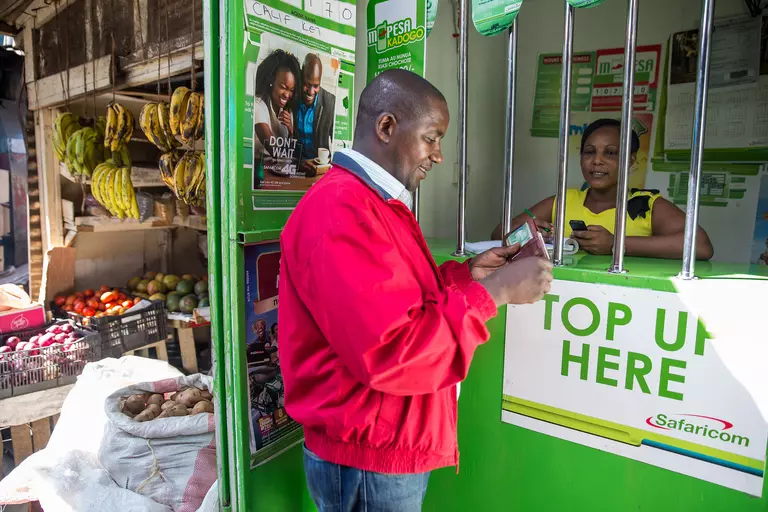
In the new year, Safaricom has revised its mobile cash transaction fees for the M-Pesa service to enhance revenue from the public.
The leading mobile services provider in Kenya, CEO Peter Ndegwa, announced the following adjustments to withdrawal charges:
For amounts between Sh50 and Sh100, the fee increases by Sh1 to Sh11.
For withdrawals from Sh101 to Sh500, the charge rises by Sh2 to Sh29.
Amounts between Sh7,501 and Sh10,000 will see an increase of Sh3, bringing the fee to Sh115.
For withdrawals from Sh10,001 to Sh15,000, the fee increases by Sh5 to Sh167.
Withdrawals between Sh15,001 and Sh20,000 will also see a Sh5 increase, resulting in a fee of Sh185.
For amounts ranging from Sh20,001 to Sh35,000, the charge rises by Sh6 to Sh197.
Withdrawals between Sh35,001 and Sh50,000 will see an increase of Sh8, raising the fee to Sh278.
For withdrawals between Sh50,001 and Sh150,000, the fee increases by Sh9 to Sh309.
According to Ndegwa, these changes are part of the company’s strategy to bolster its revenue through M-Pesa.
Safaricom has been one of the revenue streams giving the government a lot of returns through its digital tax system that mops up revenues in seconds, billing over the last two decades running.
Since its inception played a significant role in Kenya’s economy, particularly through its digital tax system and mobile money services like M-Pesa.
Its platform has enhanced revenue collection and streamlined transactions, contributing to government revenue over the years.
Safaricom’s success has also influenced broader financial inclusion and digital innovation in the region, making it a crucial player in both the telecom and financial sectors.
A cursory look into its services and an analysis of Safaricom’s Impact on Kenya’s Economy reveals how Safaricom has become a significant source of revenue for the Kenyan government through various taxes, including value-added tax (VAT) and corporate taxes.
The efficiency of its digital tax system has improved collection rates, allowing the government to fund public services and infrastructure.
On Financial Inclusion, the introduction of M-Pesa revolutionized access to financial services for millions of Kenyans, especially those in rural areas.
It has also allowed individuals without traditional banking access to engage in savings, loans, and money transfers, significantly reducing the unbanked population.
On the economic growth front, Safaricom’s operations have stimulated economic activities across multiple sectors, Ndegwa observed.
Businesses have been able to adopt digital payment systems, enhancing cash flow and operational efficiency, which the CEO says is a boon to our national economic growth and development.
This digital shift has equally encouraged entrepreneurship and small business development.
Further on Job creation,
The company has created direct employment opportunities and has stimulated indirect job creation in sectors like retail, services, and technology.
The growth of mobile money services has also led to jobs in distribution and agent networks, according to the management.
On technological innovations, Safaricom has driven technological advancements in the telecom industry, introducing innovations like mobile banking, insurance products, and e-commerce platforms. Its investments in infrastructure, such as 4G and 5G networks, have improved connectivity and facilitated digital transformation.
This has resulted in great socio-economic impact by providing affordable communication and financial services, with the leading mobile lender and services provider contributing to improved standards of living.
Ndegwa noted that access to information and services has empowered individuals and communities, promoting social inclusion.
However, despites it’s successess, it also faces consumer challenges and criticism from a segment of the public.
Some of the latest challenges it faces include regulatory scrutiny and competition from other telecom companies.
Issues related to service costs and accessibility also remain pertinent as the company continues to expand its offerings, which it may need to be relook at in the wake of consumers’ emerging concerns.
But Safaricom’s influence on Kenya’s economy is profound, driving revenue generation, promoting financial inclusion, and fostering innovation.
Its role as a cornerstone of digital transformation can not be overstated, as it continues to adapt to changing market dynamics while addressing challenges to sustain its impact on society and the economy.
