

BY ARAP DOYO (On Facebook)
Yesterday, while walking through Nairobi’s bustling streets, I witnessed something that made my blood run cold.
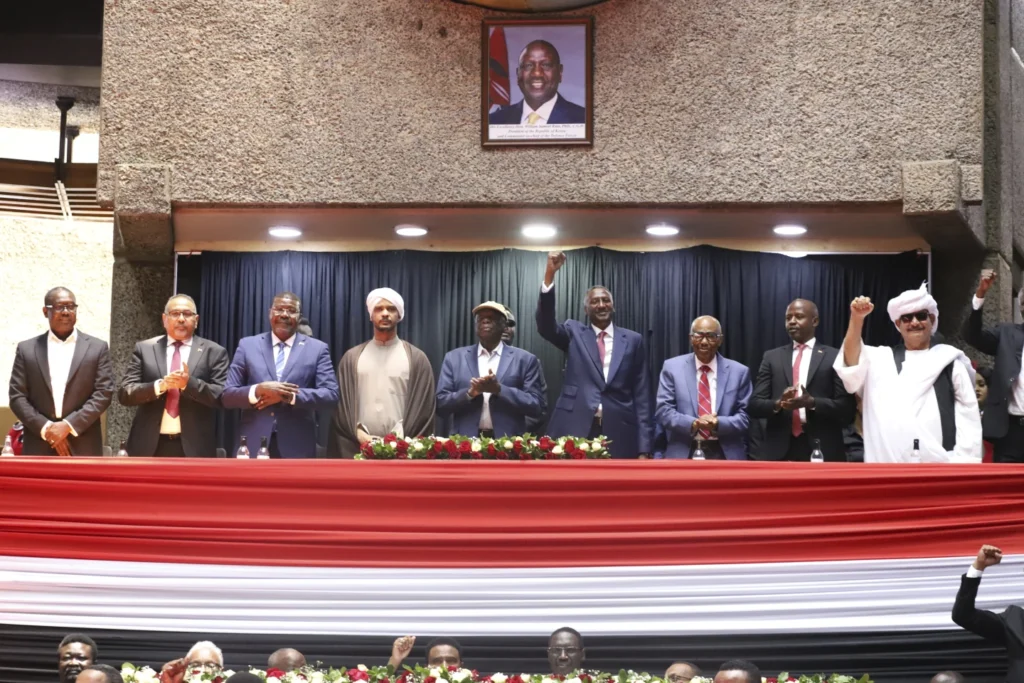
There, in the shadow of the KICC’s iconic silhouette, stood members of Sudan’s Rapid Support Forces, some dressed in suits while others in Sudan’s traditional regalia, smiling for cameras.
The sight of these rebels forces in diplomatic clothing, strutting through our capital like honoured guests, sent a chill down my spine. Not just because of who they are, but because of what their presence represents – a dangerous dance with chaos that has destroyed nations before us.
Let me tell you why my heart grows heavy with the weight of history. Like a tragedy written by the gods of chaos, its acts unfold with devastating predictability, yet nations continue to perform it, each believing they will be the one to master the choreography.
Each weapon supplied, each rebel trained, becomes a seed of future chaos.
The ghosts of proxy wars past whisper their warnings, but few listen. Pakistan, that great chess player of Central Asia, armed and trained the Mujahideen to bloody the Soviet nose in Afghanistan. Years later, those same tactics would birth the Pakistani Taliban, turning the country’s frontier regions into a nightmare mirror of Afghanistan’s chaos. The master strategists of Islamabad learned too late that the weapons of insurgency, once forged, rarely rust.
Libya’s Gaddafi, drunk on oil wealth and revolutionary dreams, armed rebels across Africa like a child scattering seeds. He supported the SPLA in Sudan, rebels in Chad, insurgents in Niger. When his own revolution came, those seeds had grown into forests of weapons and fighters that flowed south, destabilizing the Sahel.
Mali still bleeds from wounds first opened by Libyan weapons. The Tuareg rebels who helped topple Gaddafi returned home with arsenals that would eventually birth a crisis that fractured their own nation.
In the Horn of Africa, the dance turns ever more frenzied. Somalia’s Siad Barre, reaching for the Ethiopia’s Ogaden region like a child grasping at fire, found his fingers burned by Soviet-backed Ethiopia. But Ethiopia’s victory sowed dragons’ teeth – its support for Somali rebels inside Somalia, meant to keep a rival weak, helped create the very instability that would later birth Al-Shabaab, whose bombs would eventually echo in Mogadishu’s streets.
The Democratic Republic of Congo bleeds from a thousand cuts, each one inflicted with precise calculation. Rwanda, nursing wounds from genocide, sees threats in every shadow along its western border. But in trying to create safety, it sows chaos. Laurent-Désiré Kabila rises to power on Rwandan wings, only to clip those same wings when they spread too wide. The spurned allies birth new proxies – the Rally for Congolese Democracy emerges like a phoenix from the ashes of broken alliances. Local communities, caught in these deadly hostilities, form Mai Mai militias, adding their own steps to the chaotic choreography.
Iran, master of the proxy art, armed Hezbollah in Lebanon and Hamas in Palestine, only to watch these same tactics turned against them. Gulf states learned to play the same game, supporting opposition groups that would eventually threaten Iran’s own stability. But such weapons have a habit of turning in unexpected directions – just ask Saudi Arabia, whose ideological exports returned home as Al-Qaeda’s fury.
Syria armed the PKK against Turkey in the 1980s and 1990s, only to later face its own Kurdish challenge. Turkey supported Syrian opposition groups, only to find itself hosting millions of refugees and facing border instability that threatens to redraw regional maps. The apprentice becomes the master, but the dance remains the same.
And now Kenya steps onto this blood-soaked stage, extending a hand to the Rapid Support Forces – the Janjaweed in evening dress, their atrocities hidden behind diplomatic niceties. Women choose death over their tender mercies, yet here we are, offering them a seat at the table of nations. Sudan’s response comes like thunder after lightning: “all necessary measures to redress the balance.” These words echo through history’s halls, joining a chorus of threats that preceded countless proxy wars.
To disarm eastern DRC? You might as well try to catch smoke with your bare hands. The weapons are merely physical manifestations of deeper wounds – tribal mistrust, resource curses, border anxieties, and the ghosts of genocides past.
Ask Chad, which supported Darfuri rebels against Khartoum, only to watch the same tactics unleash decades of instability along its own borders. Each weapon supplied, each rebel trained, becomes a seed of future chaos.
The tragedy of nations is that they read these histories like weather reports from distant lands – acknowledging their existence but never believing the storm will reach their shores. But the wind that carries destruction knows no borders, respects no treaties. Uganda supported the SPLA against Khartoum, then watched in horror as the Lord’s Resistance Army, supported by a vengeful Sudan, devastated its northern regions for decades.
As Kenya contemplates its role in Sudan’s drama, it would do well to remember: those who orchestrate chaos abroad often find it knocking at their own door, wearing the face of an old friend or a former ally. The RSF may sign agreements in Nairobi with pens of gold, but their true signatures are written in blood across Darfur. And like a Greek chorus, history whispers its warning: the chaos you embrace today may be the demon you battle tomorrow.
In the end, nations are like children playing with matches in a room full of gunpowder, each believing they alone know how to control the flame. But as the ashes of a hundred proxy wars testify, the fire always spreads, and yesterday’s arsonists often become tomorrow’s victims.
