

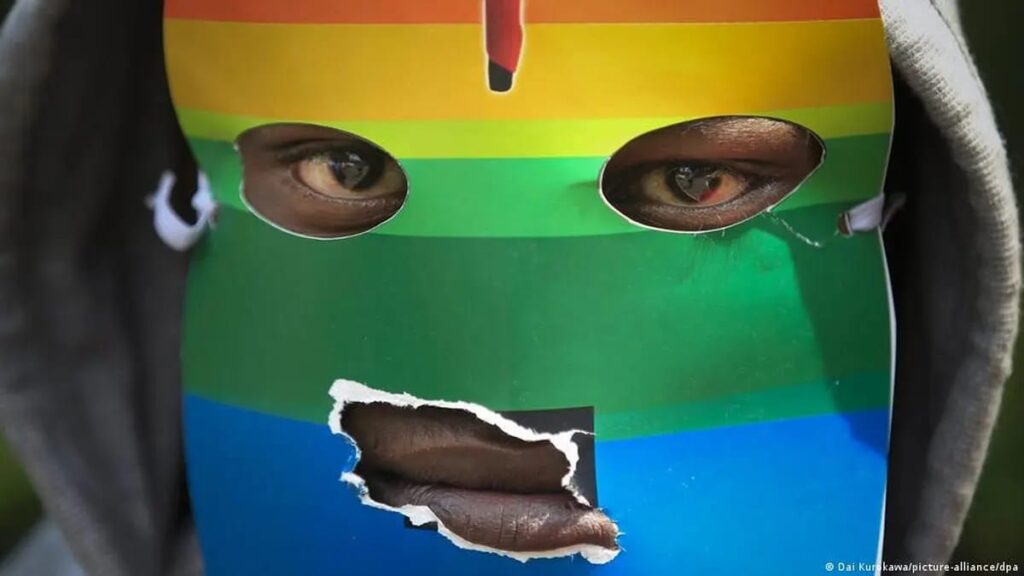
In a Nairobi community bound by silence and fear, a quiet group finds freedom by refusing to be defined.
By Jefferson Angwenyi
In a conservative community tucked deep in Nairobi, where whispers travel faster than truth and difference is treated as danger, a small group of young people has begun to live without labels — and in doing so, they’ve found a kind of freedom that words can’t contain.
At a small roadside café with faded paint and broken benches, 26-year-old Solen* pours tea for a circle of friends who meet here every Thursday. The café looks ordinary from the outside — no rainbow flags, no symbols. But for the group that gathers here, it’s sacred ground.
“This is where we exist without pretending,” Solen* says softly, glancing at the door every few minutes. “We don’t say gay, we don’t say queer. We just are.”
Across Kenya, LGBTQ+ people continue to face widespread discrimination, violence, and social exclusion. Despite growing conversations around equality, same-sex relationships remain criminalized under Sections 162 and 165 of the Penal Code — laws inherited from the colonial era that carry penalties of up to fourteen years in prison. For many, safety means silence, and visibility can come at the cost of freedom.
In this community, words can be dangerous. A neighbor’s suspicion, a careless joke, a wrong glance — they can all spark gossip, and gossip can lead to violence. For safety, most LGBTQ+ people live double lives, switching between identities like clothing.
But Solen*’s group has quietly chosen another path.
They meet to talk about art, music, and love — never using the words that would brand them in the eyes of their community. It’s not denial; it’s survival.
“I stopped introducing myself as anything,” says Mwangi*, a soft-spoken teacher in his late twenties. “When I stopped labeling myself, I stopped feeling like I was living a lie. I just love who I love — quietly, safely.”
The group calls their meetings Mawimbi — Swahili for waves — because they see themselves as part of a larger tide, something that moves silently but reshapes the shore over time.
Each member brings something: poetry, sketches, or songs that speak in metaphors.
A poem about rain falling where it shouldn’t.
A painting of two shadows holding hands.
A song about the moon, which shines for everyone but belongs to no one.
To outsiders, it’s art. To them, it’s truth.
“When people can’t name you, they can’t easily condemn you,” says Lila*. “The label becomes the weapon. So we took the weapon away.”
Lila* still remembers the night she was chased from her home after rumors spread that she “wasn’t normal,” she says softly. Since then, she’s learned to survive in subtler ways — through coded language, trusted friendships, and the refuge of Mawimbi.
Their existence remains invisible to most in the community, but within their circle, something extraordinary happens: they laugh freely, share secrets, and fall in love — without explanation.
In a place where laws, religion, and tradition all speak against them, this label-free life feels radical.
“We’re not hiding,” Solen* insists. “We’re just choosing not to be defined by words that others use to hurt us.”
As the evening sun fades, they step out one by one, blending back into the town that cannot see them — at least, not yet.
But inside, something is shifting.
In a place built on fear, a new kind of freedom is quietly growing — one that has no name, and perhaps doesn’t need one.
Editors Note
Names marked with an asterisk (*) have been changed to protect identities.
